
When Being Seen Isn’t Being Known
What we edit out of conversations — and what it costs our relationships, teams, and work.
We hold back more than we realize. The question we’re afraid to ask. The disagreement we avoid. The “I don’t know” when we’re expected to have the answer.
Drawing on 20+ years as a speech-language pathologist and healthcare leader, Lauren Polly helps audiences see what gets left out of everyday communication — and how it affects candor, connection, and the way we work together.
Through relatable stories and practical tools, she helps people communicate with more honesty, flexibility, and choice.
Why This Matters
We don't only edit our words. We edit ourselves.
The expert who can't say, “I don't know.”
The easygoing person who doesn't disagree.
The capable one who doesn't ask for help.
The leader who feels like they're supposed to have the answer.
The team that has become so good at keeping things moving that no one asks the question that might change the conversation.
There is nothing necessarily wrong with these ways of showing up. In fact, they are often the qualities that helped us succeed, belong, connect, and earn others' trust.
The problem is we can get so good at maintaining that image that we stop noticing what we leave out.
We can keep functioning well while our conversations become more predictable, our relationships less honest, and our teams less open to different ideas.
Lauren helps audiences recognize these automatic patterns — and experiment with different ways of responding when the conversation, relationship, or moment calls for something else.
Women’s Event Keynote Author Feature
Interview with PBS’s Jim Masters
Signature Talks & Conversations
One body of thought. Different doors.
Lauren's talks combine personal storytelling, communication expertise, everyday examples, humor, and practical reflection. Each can be tailored to the audience while remaining rooted in a simple question:
What happens when the version of us that works starts getting in the way?
When Being Seen Isn't Being Known
What we edit out of conversations — and what it costs our relationships, teams, and work.
The expert who can’t say “I don’t know.” The easygoing person who rarely disagrees. The capable one who doesn’t ask for help.
We get good at being who people expect us to be. And sometimes, that’s the only part of us they get to know. We hold back the question, the different opinion, the uncertainty, the weird idea, the thing we actually need.
And it costs us. At work, we lose candor, curiosity, and creativity. In our relationships, we can be surrounded by people who love us and still feel strangely unknown.
Drawing on more than 20 years as a speech-language pathologist, Lauren helps audiences notice what they’ve gotten used to leaving out—and experiment with bringing more honesty, flexibility, and choice into everyday communication.
Because being seen isn’t always the same thing as being known.
Beyond the Version That Works
When the strengths that made us successful start limiting how we lead, communicate, and adapt.
Being the expert, problem-solver, dependable one, or person with the answer can build a successful career.
But when those strengths become automatic, they can make it harder to ask better questions, change course, navigate uncertainty, or respond differently when the situation demands it.
Lauren calls these practiced ways of showing up The Version That Works.
This keynote helps audiences notice when a genuine strength has quietly become their default response — and experiment with greater range in how they communicate, lead, relate, and respond.
Beyond the Label
Specialty keynote for mental health, healthcare & education audiences
Drawing from her bestselling, multi-award-winning book The Other Side of Bipolar and her experience of receiving a bipolar diagnosis at fourteen that was later overturned, Lauren explores what happens when a useful description becomes a definition — and begins shaping what we believe is possible for our lives.
Using her own experience as a doorway rather than a prescription, Lauren opens a wider conversation about stigma, identity, self-perception, and the importance of seeing the whole person behind a diagnosis or label.
Workshops & Interactive Conversations
Less lecture. More discovery.
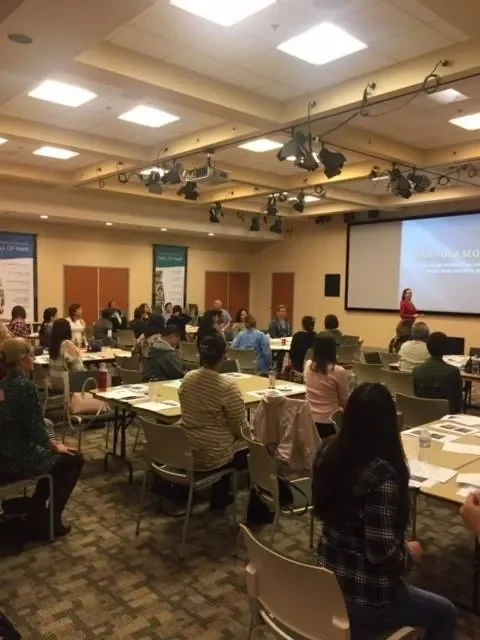
Lauren's workshops combine short teaching segments, personal storytelling, guided reflection, group discussion, and live Q&A.
Participants don't leave with another ideal for how they should communicate or lead. They leave noticing their own patterns more clearly — and with practical experiments they can use in the conversations, relationships, and work they're already in.
Sessions can be adapted for leadership teams, healthcare and helping professionals, women's groups, universities, retreats, workplace culture programs, and smaller facilitated conversations.
Workshop themes can include:
Communication and feeling known
Professional roles and the habits success reinforces
Speaking up, asking for help, and saying “I don't know”
Labels, self-perception, and identity
Flexibility in leadership and communication
Connection, belonging, and the things we leave unsaid
“We don't only edit our words. We edit ourselves.”

What Audiences Experience
Warm enough to disarm. Clear enough to land.
Lauren doesn't speak at an audience as though they're there to be fixed. She creates a conversation.
Her style combines emotionally resonant storytelling, humor, more than 20 years of communication expertise, and ordinary examples people recognize from their own lives.
A story may begin somewhere deeply personal and end with someone suddenly recognizing the question they don't ask in meetings, the help they don't request, the disagreement they swallow, or the role they've become incredibly good at playing.
The experience is reflective without becoming vague.
People have room to think — and leave with language for what they've noticed and something concrete to try.
Audience Take Aways
New language for recognizing the patterns shaping how they show up
Notice when a strength, role, or adaptation has become an automatic response rather than a choice.
Greater flexibility in communication
Recognize what they routinely edit, avoid, or assume — and experiment with different responses when the moment calls for them.
A different understanding of being known
See why being visible, appreciated, successful, or surrounded by people isn't necessarily the same thing as feeling known.
Practical experiments they can use immediately
Small ways to ask the question, say the thing, request help, tolerate not knowing, or respond differently without blowing up the life or career they've already built.
“Being really good at one way of showing up can make it surprisingly hard to notice when the moment is asking for something different.”
Client Reviews
“Lauren’s true gift lies in her ability to connect – whether that is one on one or in a group of 100+. I’ve sat in her presence in both circumstances and truly felt seen, heard, and inspired to take action on the tools she shares.”
~ LeAnn, HR Manager, Los Angeles
“I was impressed at Lauren’s vast knowledge base, real-life examples, and the simple tools she shared. I was particularly impressed that she invited group participation and fielded questions so that everyone got help on the issues that were directly impacting them. We all left with a lot of practical tips to help lead our team into healthier dynamics.”
~ Joe, Cardiac Manager, Los Angeles
“A note to express my appreciation and gratitude for what you brought to Transport Topanga Literary Festival. It’s amazing to me that a person can be a container for so much transformation and still hold a brilliant, genuine smile and bounce in their step. Your triumph over doctors and labeling and pain is truly inspiring and educational. I hope our paths cross again.”
~ Kim, Director of Topanga Literary Festival

About Lauren Polly
Lauren Polly, MEd., CCC-SLP, is a speaker, speech-language pathologist, healthcare leader, and bestselling, multi-award-winning author of The Other Side of Bipolar.
For more than 20 years, she has worked in communication — helping people express what's inside, connect with other people, and participate more fully in daily life.
Her interest in the roles and labels that shape us is also deeply personal.
Lauren received a bipolar diagnosis at fourteen and spent many of her formative years understanding herself through what that diagnosis seemed to say about who she was and what her future could look like. The diagnosis was later overturned.
That experience became the foundation of The Other Side of Bipolar and eventually opened a much wider question:
What happens when something that describes us starts defining us?
Today, Lauren brings that question into conversations about communication, leadership, mental health, relationships, identity, and human connection.

As Seen in:


A Fit For Many Rooms
Lauren's work is particularly relevant for audiences navigating communication, leadership, change, professional identity, mental health, belonging, and human connection.
Leadership and professional conferences
Healthcare and helping professionals
Women's conferences and communities
Executive retreats and offsites
Workplace culture and well-being programs
Universities and educational communities
Mental health and author events
Facilitated conversations and small-group workshops